The rehearsal dinner is the evening before the wedding, and white is the natural choice for the bride. What changes through the year is everything around the color: the weight of the fabric, how long the dress is, what goes over it, and what you walk in.
This guide goes season by season. For the dress itself, our rehearsal dinner guide goes deeper, and the rehearsal dinner edit has white pieces in every weight.
Start with the venue, then the season
Season sets the temperature, but the venue sets most of the rules. A summer dinner in an air-conditioned restaurant can feel cooler than a fall dinner on a heated terrace. Before you choose, find out three things:
- Indoors or outdoors, and for how long. A drinks hour on a lawn followed by dinner inside is two climates in one night.
- The ground. Grass, gravel, a dock, stone steps. This decides your heel.
- The dress code, if there is one. If the invitation says cocktail or formal, length and fabric should follow it whatever the month.
Then use the season to fine-tune.
Spring
Spring weather is the hardest to plan for. Afternoons can be warm and evenings cold, and rain is always possible.
Fabrics. Mid-weight fabrics suit spring well: crepe, a heavier cotton, a lined lace, or a matte satin. They hold their shape in a breeze and are not too warm if the day turns mild.
Lengths. Midi is the easiest length in spring. It works for a garden dinner and a restaurant alike and keeps hems clear of damp grass.
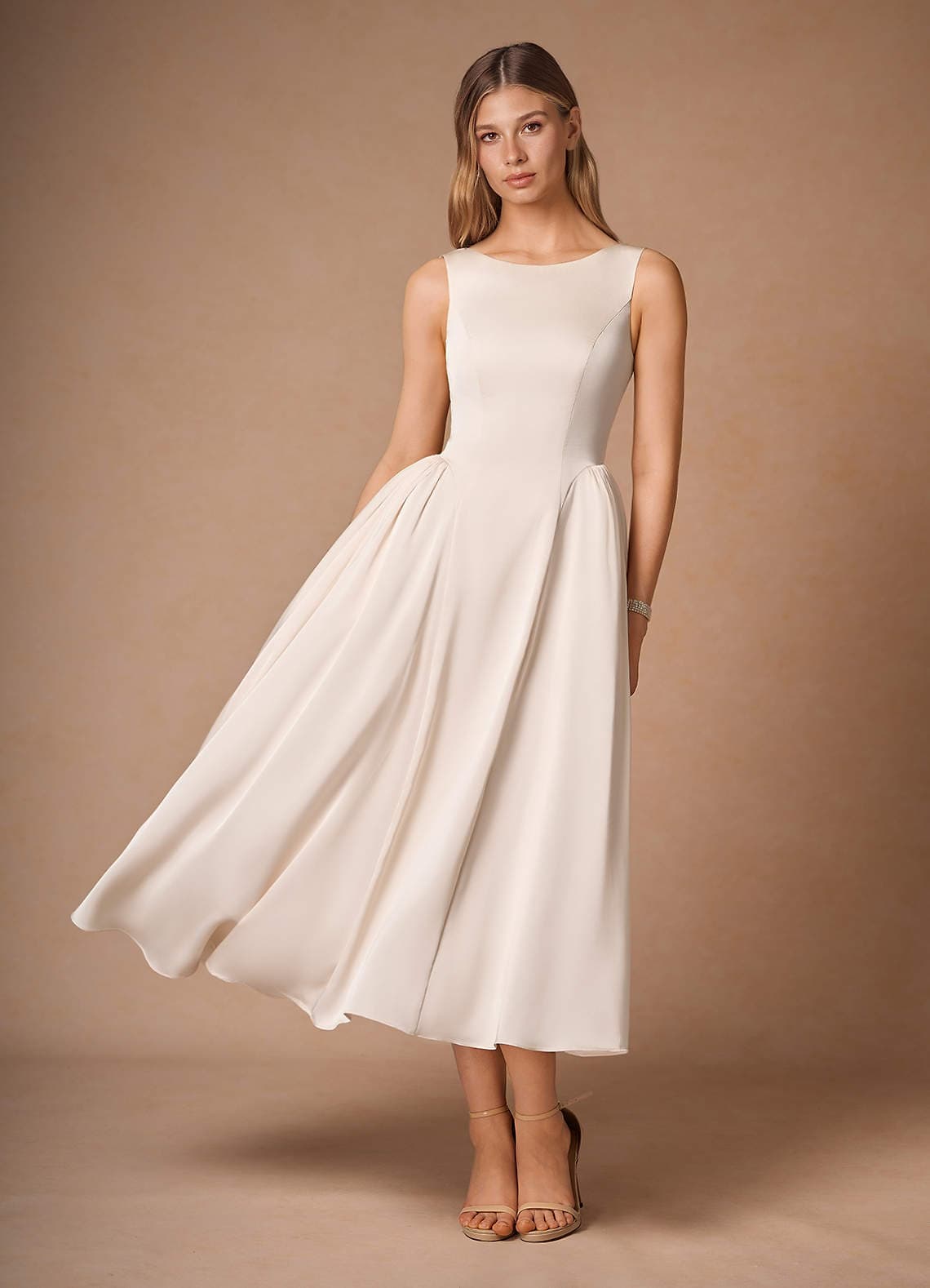
Layers. Bring a layer you would be happy to be photographed in, since it may stay on all evening. A cropped cream jacket, a tailored white blazer or a fine knit cardigan all work. A wrap in a heavier fabric is useful if the dinner is outside.
Shoes. If there is any chance of a lawn, choose a block heel or a flat. Pack a spare pair if rain is forecast and the walk from the car is long.
Summer
Summer rehearsal dinners are often outside, often late, and often warm. The aim is to stay cool and look composed when the photos start.
Fabrics. Linen, cotton poplin, eyelet, light silk and loose satin all breathe. Be aware that linen creases quickly; if that bothers you, look for a linen blend or plan to steam right before you leave. Check any light fabric in daylight for sheerness before the day.
Lengths. Anything works in summer. Minis and midis are cooler; a light maxi looks lovely on a terrace at sunset. If the dinner is on sand or a dock, keep hems off the ground.
Layers. Even on hot days, air conditioning indoors can be cold. A light shawl or a thin cardigan in the bag is enough.
Shoes. Sandals with a low or block heel suit most summer venues. Flat sandals for beach dinners. Check that straps do not rub before you wear them for a full evening.
Fall
Fall gives you the widest choice of fabric and the most interesting textures to wear in white.
Fabrics. Crepe, heavier satin, ivory velvet, wool blends and knit dresses all come into play. A long-sleeved white dress in a heavier fabric looks considered and stays warm.
Lengths. Midi and maxi are comfortable as evenings cool. A white suit or wide-leg trousers with a fitted top also suits a fall dinner well, especially at a restaurant.
Layers. A tailored coat in cream or camel works over a white outfit and photographs well on arrival. Inside, a long sleeve may be all you need.
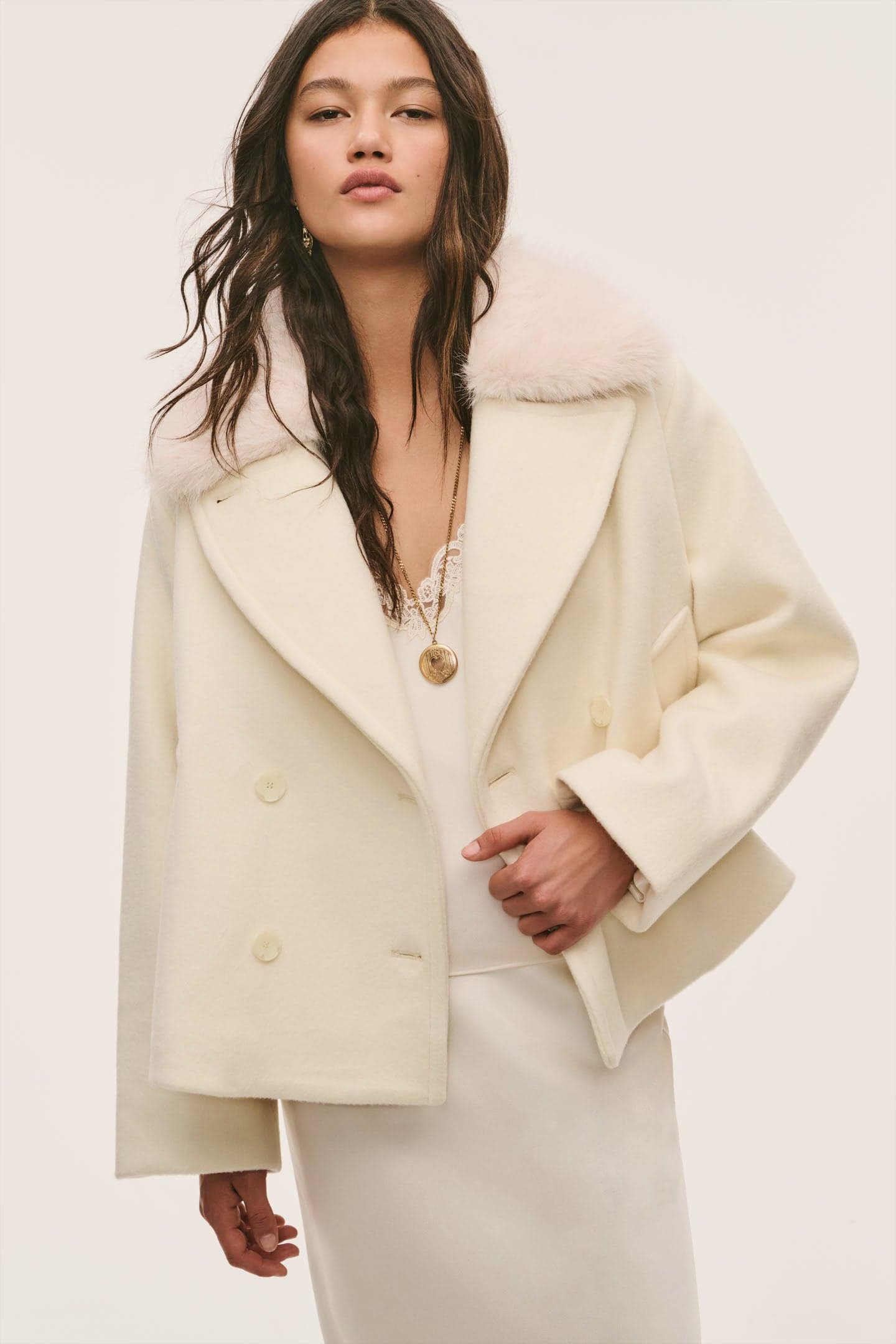
Shoes. Closed-toe pumps, heeled boots under a long hem, or a pointed flat. If the dinner is at a vineyard or farm, ask about the ground and choose a heel that will not sink.
Winter
A winter rehearsal dinner is almost always indoors, which gives you more freedom with the dress and puts the attention on the coat and shoes.
Fabrics. Heavier satin, crepe, velvet, brocade and fine knit. Long sleeves or a high neck feel right in winter, though a sleeveless dress under a good coat works in a warm room.
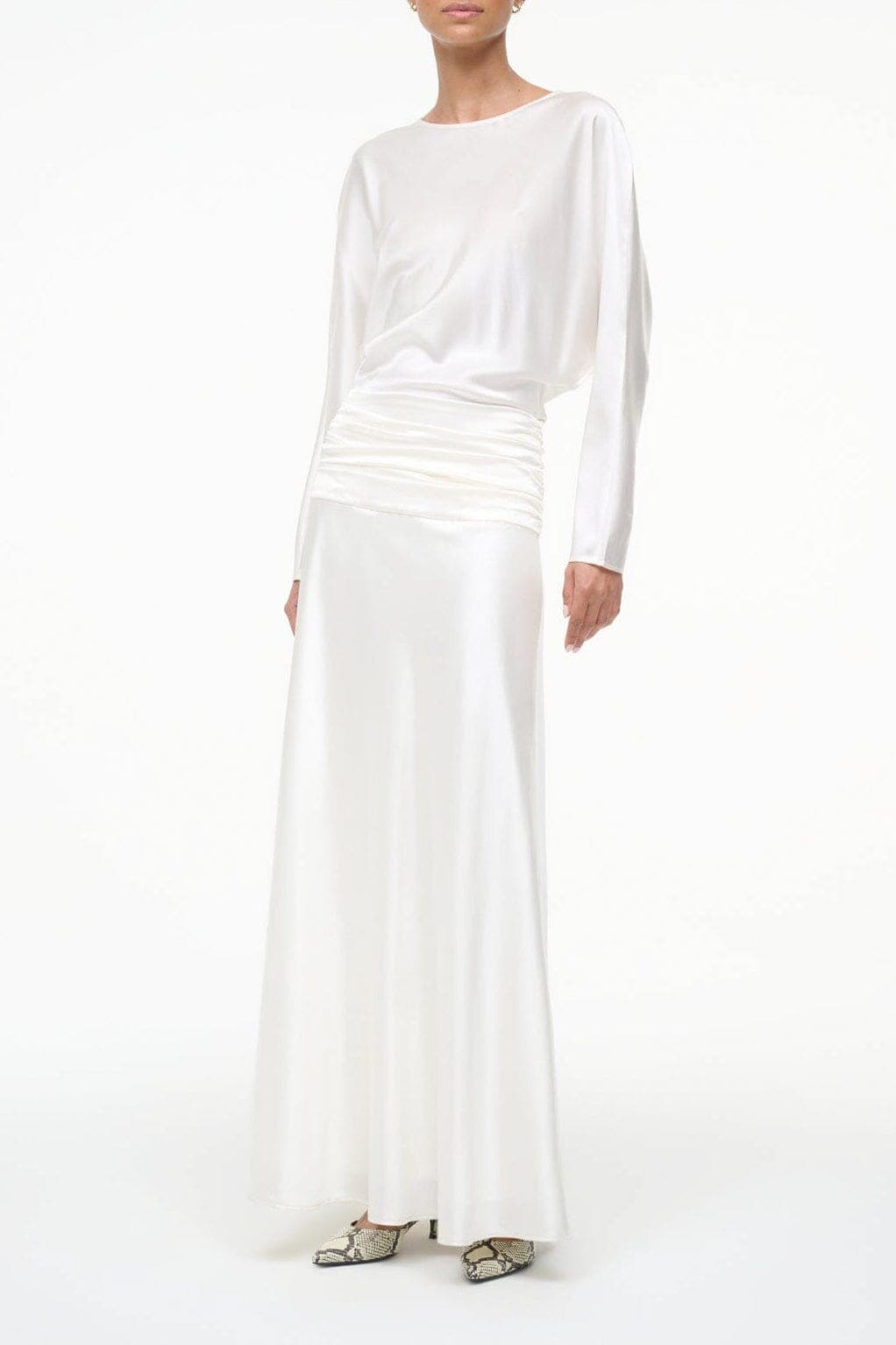
Lengths. Midi with tights, or a full-length dress for a formal room. If you are wearing tights, sheer nude or sheer ivory sits more quietly under white than opaque black.
Layers. The coat is part of the outfit, since you will be photographed arriving. A long cream or ivory coat keeps the look together. If you are traveling to the dinner on wet streets, a darker coat that covers the hem may be more practical.
Shoes. Closed shoes with grip. If there is snow or salt, wear boots there and change at the door; bring a bag for the boots.
Things that hold true all year
- Choose a white that sits next to your wedding dress. If your wedding dress is ivory, a bright white rehearsal outfit can look stark beside it in shared photos. Compare the two in daylight if you can.
- Plan jewelry once. Simple rehearsal dinner jewelry in one metal ties the look together through any season.
- Do a full try-on. Wear the outfit, layer and shoes together for half an hour at home before the night.
- Bring a small kit. A stain-remover pen tested on a hidden seam, a few safety pins and blotting papers.
Rehearsal dinner by season FAQ
- Can I wear a short white dress to a winter rehearsal dinner?
- Yes, if the venue is warm and the dress code allows it. Add sheer tights, closed shoes and a long coat for arriving, and choose a heavier fabric so the dress reads as a winter piece.
- What fabric is comfortable for a summer rehearsal dinner?
- Linen, cotton poplin, eyelet and light silk all breathe well in heat. Check any light fabric in daylight for sheerness, and allow for creasing with linen.
- Should the rehearsal dinner outfit match the wedding dress shade?
- It does not have to match, but it helps if the two sit well together in photos. Compare the shades in daylight, and if one is much brighter, choose the softer white for the rehearsal.