White is the color of the whole wedding year, from the engagement shoot to the honeymoon. It is also the color that shows everything underneath it. A lovely dress can be let down by a visible line, a strap in the wrong place or underwear that glows through in a photo.
The good news is that this is easy to solve once you know what to look for. This guide covers the shade of what you wear underneath, seams and texture, slips and linings, strapless and backless pieces, and how to test it all before the day.
Match your skin, not the dress
The instinct is to wear white under white. In most cases that is the wrong choice. White underwear has its own brightness, and under a thin or light fabric it shows as a distinct white shape against your skin.
What disappears under white is underwear close to your own skin tone. Look for the shade nearest to your skin, ideally a touch deeper rather than lighter. Nude means different things for different people, so ignore the label name and hold the piece against the inside of your wrist or your stomach in daylight.
There are exceptions. Under a fully lined, heavy or opaque fabric, the shade underneath matters much less. And if a piece is designed to be seen, such as a lace bralette under an open blazer, then white or ivory makes sense. For everything else, match your skin.
Seams, edges and texture
Shade is half of it. The other half is shape.
Seams and edges. Thick elastic edges, lace trims and seams show as lines under smooth fabrics like satin, crepe and jersey. Bonded or laser-cut edges sit flatter. If a dress is cut close to the body, look for underwear with no visible edge at the leg or the back.
Texture. Lace, mesh and embroidery can show their pattern through a thin white fabric. Smooth microfiber or a fine cotton is less likely to.
Coverage. Think about where the dress sits. A low back, a high leg slit or a deep neckline each rule out certain pieces. Lay the dress out and look at where the openings are before choosing what goes underneath.
Fit. Underwear that is too tight shows as a ridge through fitted fabric. Get measured or try sizes against the actual outfit rather than going by what you usually buy.
Slips and linings
Many white dresses are lightly lined or not lined at all, especially linen, cotton and lightweight summer styles. A slip can make a sheer dress wearable and helps fabric move without clinging.
When to add a slip. If you can see the outline of your legs or your underwear through the skirt in daylight, a slip will help. It also helps fabrics that cling, like thin jersey or satin, fall more smoothly.
A slip here is a lining layer for a sheer or unlined skirt, not close-fitting underwear. The body of the slip is smooth, and any lace on it sits at the neckline or the hem, away from where a dress clings.
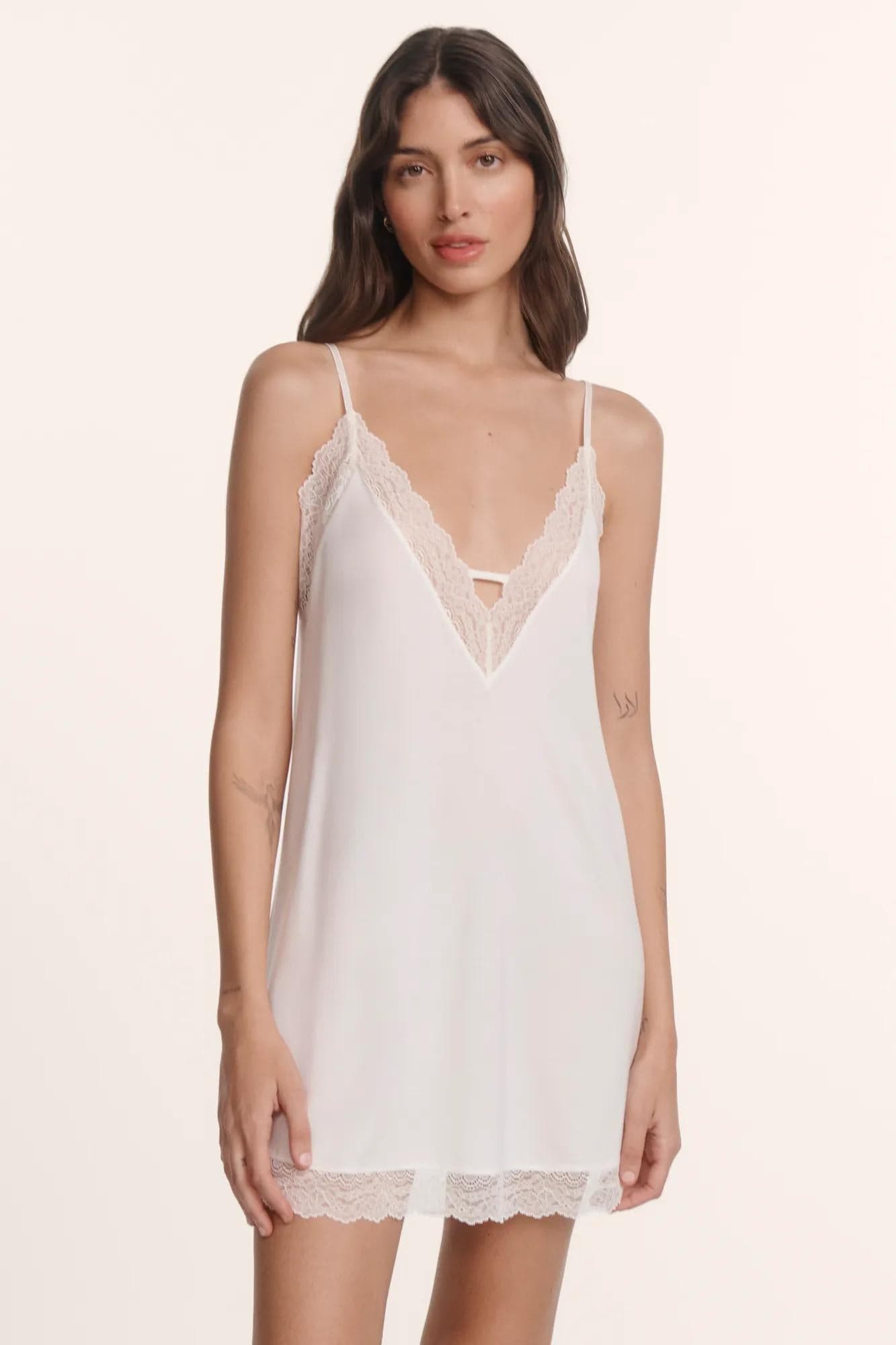
Which shade. As with underwear, a slip close to your skin tone is usually less visible than a white one under a thin white fabric. Under a heavier white fabric that is only slightly sheer, an ivory or white slip can make the dress look more solid.
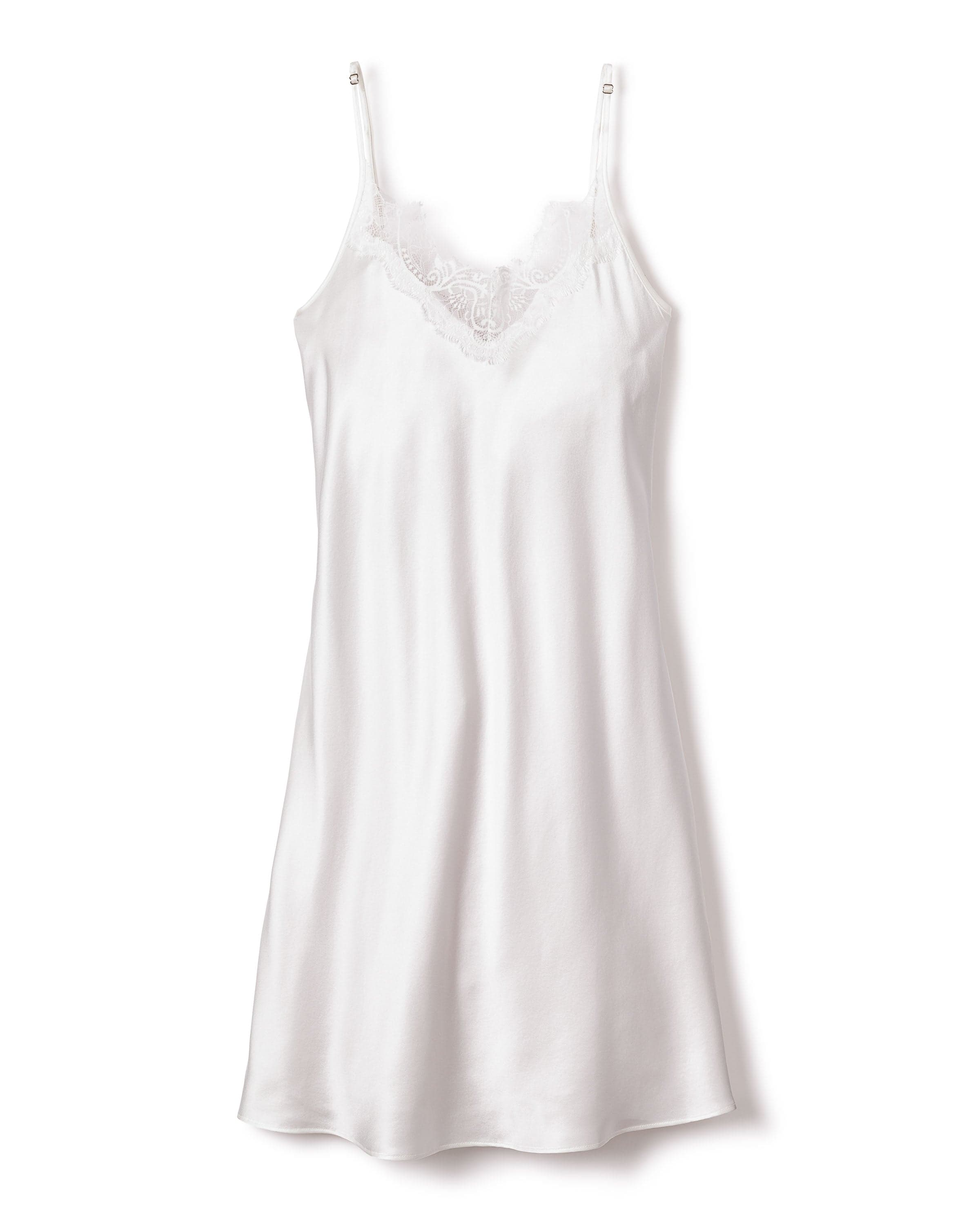
Which length. The slip should end above the dress hem, and above any slit. A half slip works for skirts and dresses that are only sheer below the waist.
Linings you can add. If you love a dress that is too sheer, a tailor can usually add a lining. Ask about it at the same time as any other alterations, and give them time.
Strapless and backless
These are the pieces that cause the most last-minute worry. Solve them early.
Strapless. A strapless bra needs to stay in place for hours without constant adjusting. Try it on with the dress, then walk, sit, lift your arms and bend forward. If it slips, try another size or style before the day. Some dresses have room for cups to be sewn in; ask a tailor whether yours could.
Backless and low back. Options include adhesive cups, low-back bras that fasten at the waist, and built-in support sewn into the dress. Adhesive pieces can lose grip with heat, sweat, body oil or lotion, so test them for the length of the event, in similar conditions if possible, and keep skin clean and dry where they go.
Halter and one-shoulder. A convertible bra with straps that can be rearranged often works. Check that the straps are fully hidden when you move.
Shapewear. If you wear it, choose a shade close to your skin, check the edges against the dress, and make sure you can sit and use the bathroom in it without help. Wear it to a fitting so the dress is altered around it; our guide to what to wear to a dress fitting covers this.
Test in daylight and with a flash
Problems under white often show up in only one kind of light. Test in two.
- Daylight. Stand near a window or step outside in the full outfit. Look at yourself front, back and side in a mirror, especially where light hits from behind. A fabric that seems opaque indoors can turn sheer in sun.
- Phone camera with the flash on. Ask someone to take a few photos of you with the flash, from the front and back, and in a darker room. Flash photography can show lines and shapes the eye misses. Look at the photos at full size.
Test in the exact pieces you plan to wear, including shoes, since heel height changes how a hem falls. Then do it again closer to the day if anything changes.
Before each event
- Check the light at the venue. An outdoor ceremony at midday is different from a candlelit dinner.
- Pack a backup: a spare pair of seamless underwear and adhesive cups if you rely on them.
- If you are getting ready with others, keep the underwear for the day in a labeled pouch with your outfit.
Browse the getting-ready edit for robes and sets to wear while you dress, and our getting-ready guide for the rest of the morning.
What to wear under white FAQ
- What color underwear should I wear under a white dress?
- Choose a shade close to your own skin tone rather than white. White underwear can show as a bright shape under light fabric, while a skin-tone shade tends to disappear.
- Do I need a slip under a white dress?
- If you can see your legs or underwear through the fabric in daylight, a slip will help. Pick one close to your skin tone and make sure it ends above the hem and any slit.
- How do I check if a white dress is see-through?
- Stand in daylight with light behind you and look in a mirror, then have someone take photos with the phone flash on. Check the photos at full size, in the exact underwear and shoes you plan to wear.